岩_PROJECT
Sakhr
Overview
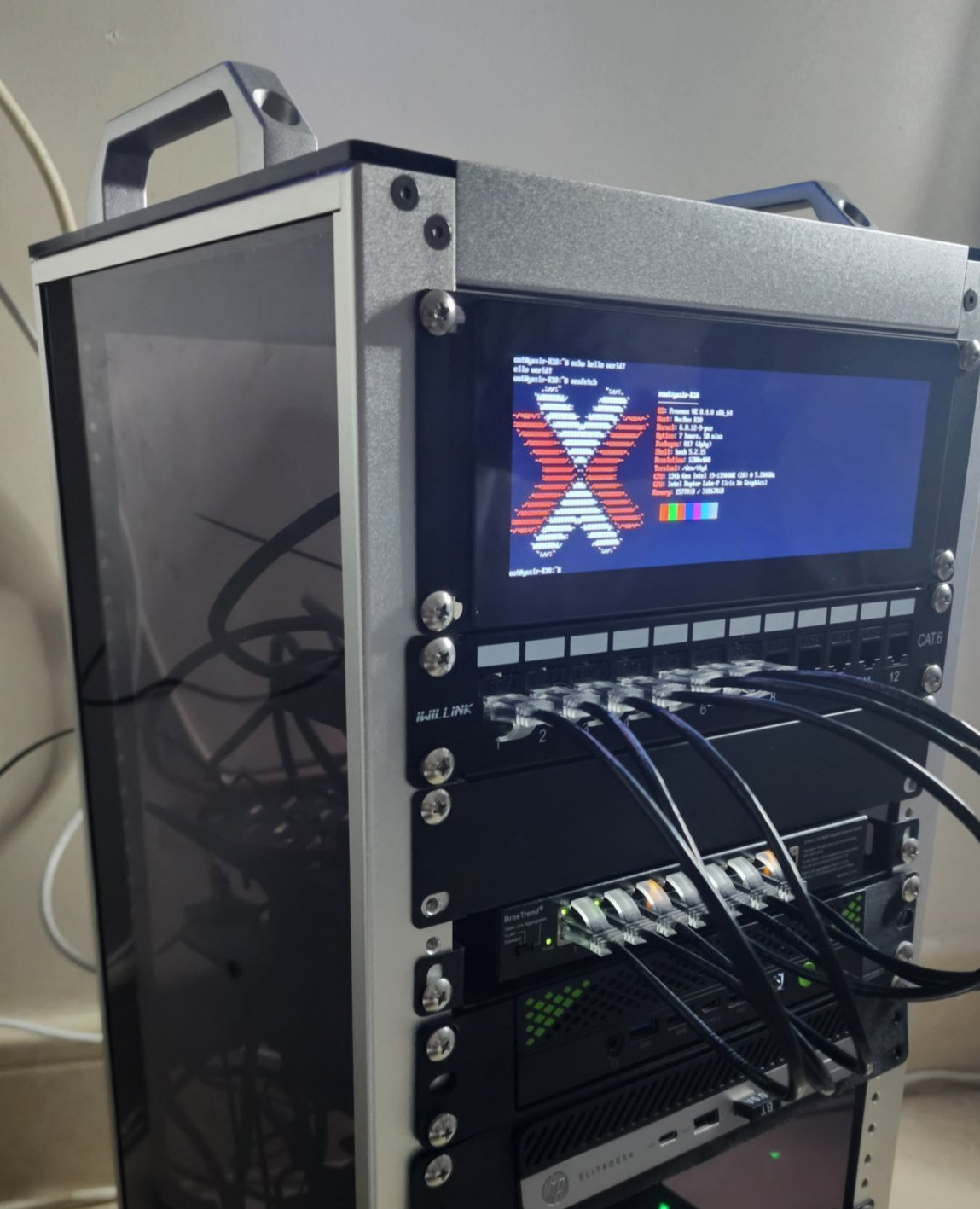
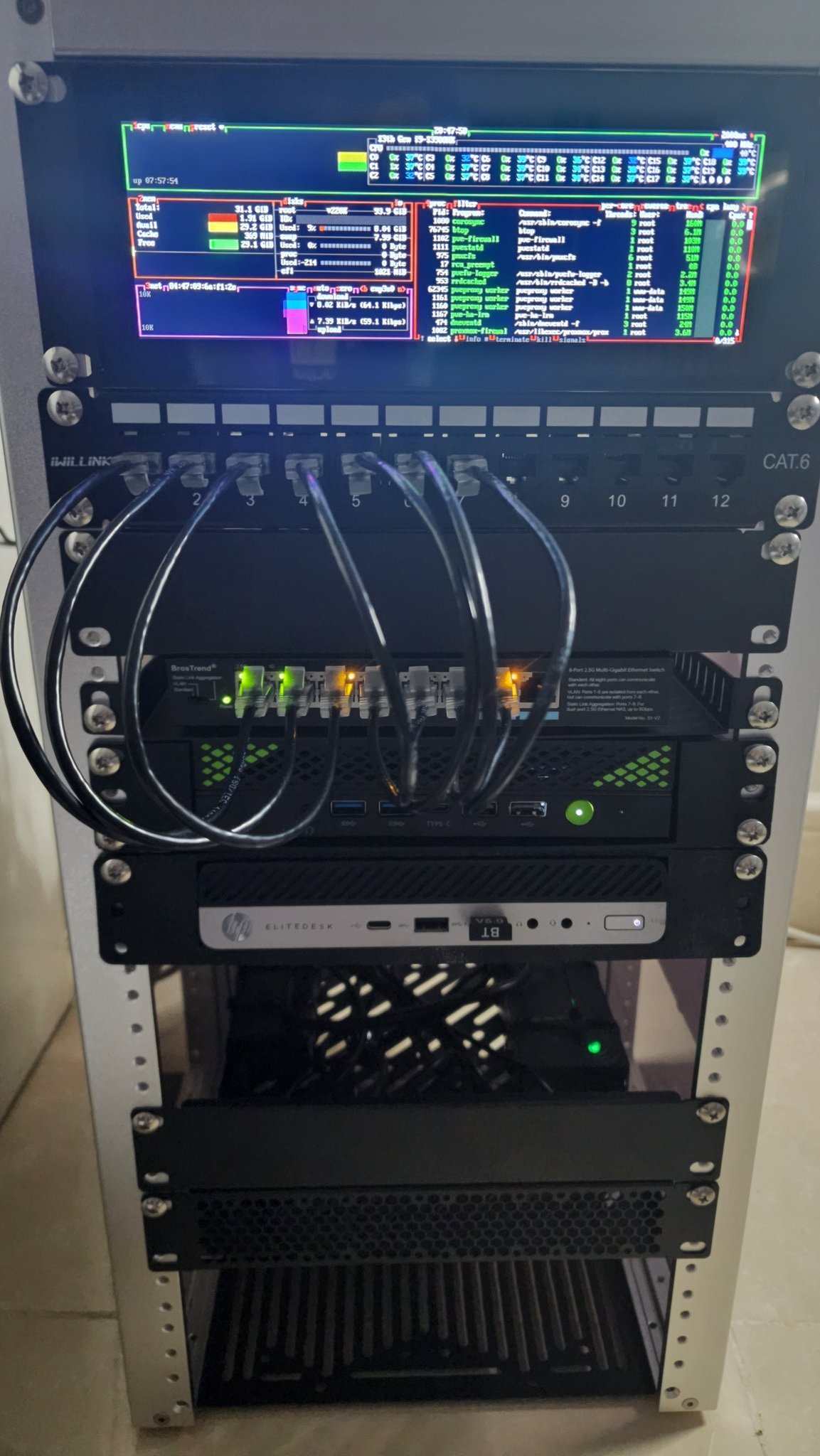
Sakhr (Rock in arabic) started simple: I needed a local server to run my containers and personal projects, so I bought a very modest mini-PC. It was more than enough — until the number of services grew, Chroma among them, and the box started to strain. That raised the real question: how do I scale up without throwing away the machine I already have?
Clustering & High Availability
The answer was Clustering, which also unlocks High Availability (HA), wiring a second node in through a switch so the two are managed as one and back each other up. If one node goes down, its workloads automatically fail over to the other, which absorbs the entire load without missing a beat.
Note: You will need minimally 3 nodes for HA to work correctly, since it's relies on a voting system, the third node could be a cheap chip, nothing fancy.
Another Note: Multiple nodes under the same rack are usually simply called a "Rack", and several connected Racks are called a "Cluster".
From there the path was clear, and that is to find the second node. I landed on the GMK K10. Together the two form a strong, easily expandable foundation, scaling up to 256 GB of RAM across two CPUs, with minimal power draw:
- ▪i9-13900HK
- ▪i5-15700T
The build
Two final steps: the rack, where I chose a 10-inch rack for minimum weight, and then the cable management, which I obsessed over. Everything strapped down tight, every device fed from a single rear-mounted power connector. The payoff: a server this powerful that's also plug-and-play portable, a datacenter you can pick up and carry, which I actually did by bringing it to my university, which is around 50KM away.
I 3D printed rackmounts for each Mini-PC just to make sure everything is tight
What it runs
- ▪Gentoo LXC's used for compiling and maintaining portage packages
- ▪Minecraft Server running through a low latency tunnel, No port forwarding
- ▪Network-wide ad blocker for the home network.
- ▪Chroma and other production services, automation, and bots.
What I learned
This project taught me a lot, from networking to the cloud, and how much it offloads for you. Under the hood it meant constant optimization: storage architecture, VM networking, and performance tuning like Zram. It's a continuously evolving system that I still keep on shaping, a true exercise in infrastructure engineering, and is truly my favourite project.